Los Banditos: migrating to Shopify and rebuilding the purchase flow
Los Banditos is a Turkish brand making bohemian womenswear. We migrated the brand's long-running store to Shopify, then redesigned the collection, product, cart and checkout flows around the realities of the Turkish market and automated the shipping operation.
What we inherited
- Thousands of products, categories and customer records, all tied to search traffic on the old URL structure.
- A shopping flow that struggled on mobile and offered no filtering within a category.
- A manual shipping process and a dependence on paid integrator apps.
- Province and district confusion in billing and delivery addresses, creating correction work in operations.
Our goal
- Change platform while holding the existing search positions.
- Turn the category page into a genuine choose-and-find experience.
- Make size selection and the purchase step error-free on the product page.
- Generate shipment records, labels and tracking numbers with the store's own infrastructure.

Migration and protecting hard-won search traffic
- Product, variant, collection and customer data were converted to Shopify's format and migrated, with metafields created for colour, model code and secondary stock code.
- 4,919 301 redirects: category, product, blog, page and filter URLs were mapped one by one.
- Filtered collection pages gained a dynamic H1, crawlable colour links and self-canonicals.
- URLs with unnecessary parameters were closed to crawling in robots.txt, and product data was published as JSON-LD.
Collection experience — filter and sort
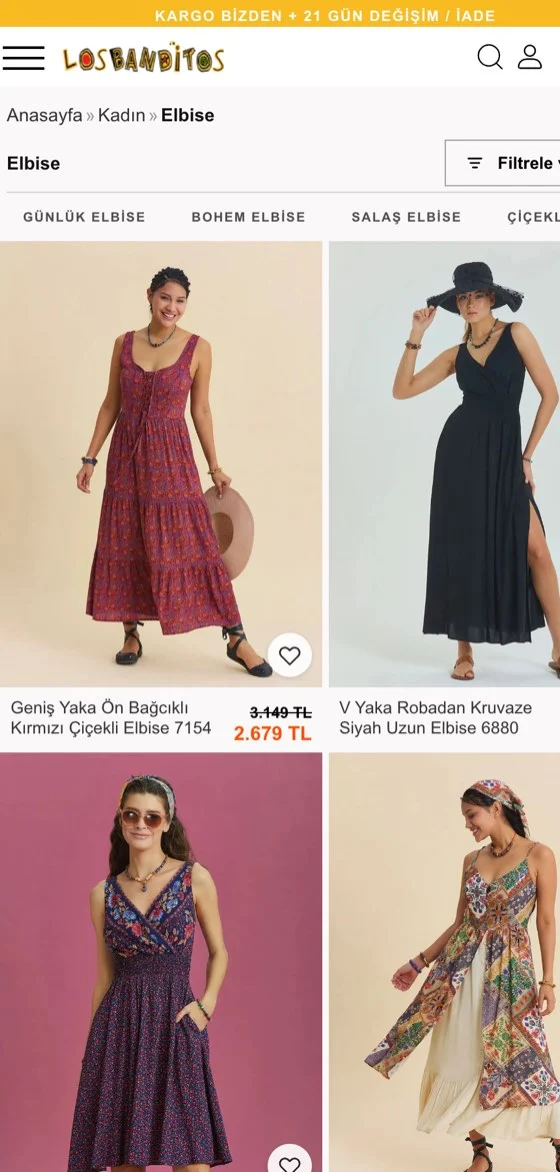
- One button and one panel on both mobile and desktop: applied filters, sorting, and product type / size / colour / price groups.
- A custom component turning Turkish colour names into swatches, a size box grid, and a draggable price range slider.
- Multi-level breadcrumbs and a sub-category strip generated automatically from the menu hierarchy.
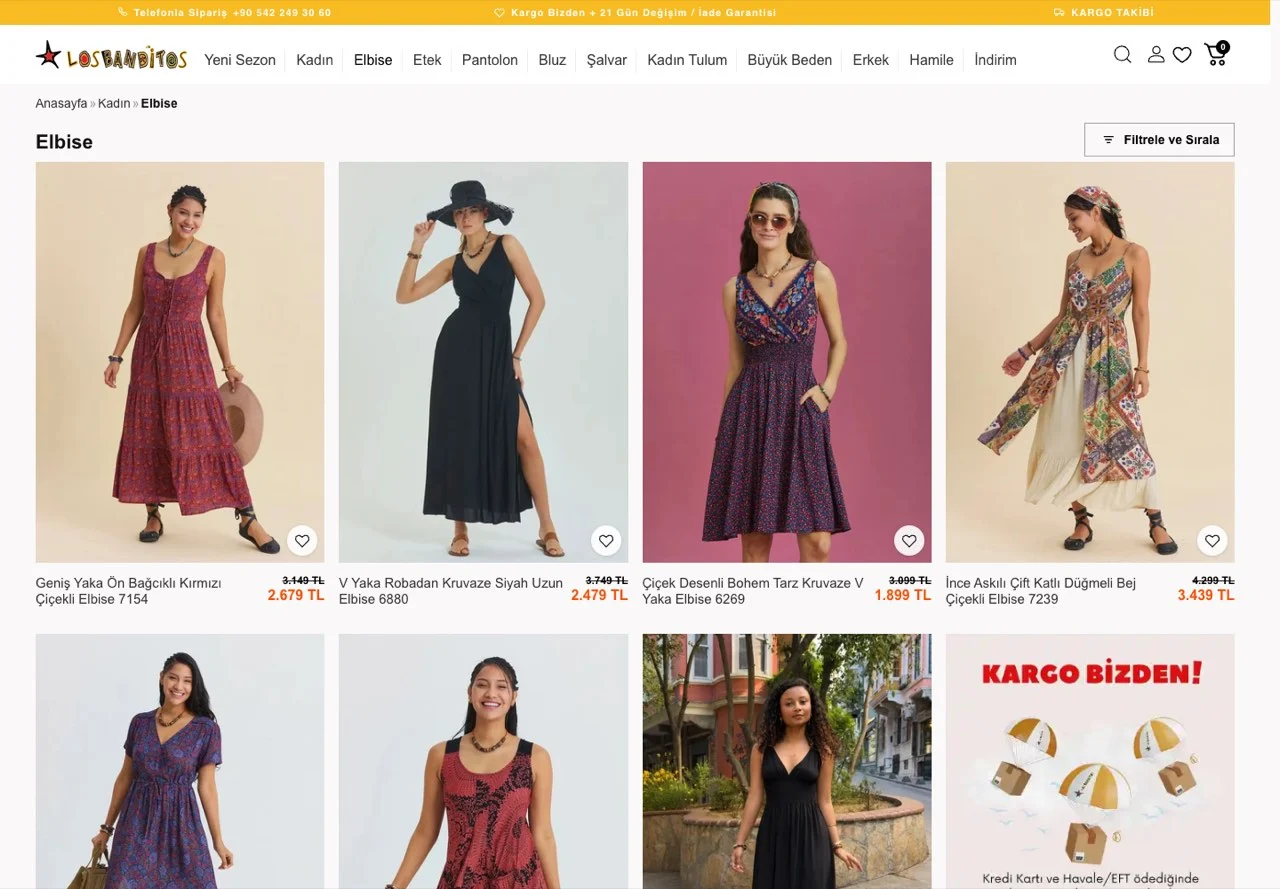
- A campaign area in the 7th, 24th, 48th and 72nd cells of the product grid, moving at the same rhythm as the product flow.
Product page — an uninterrupted flow from size to payment
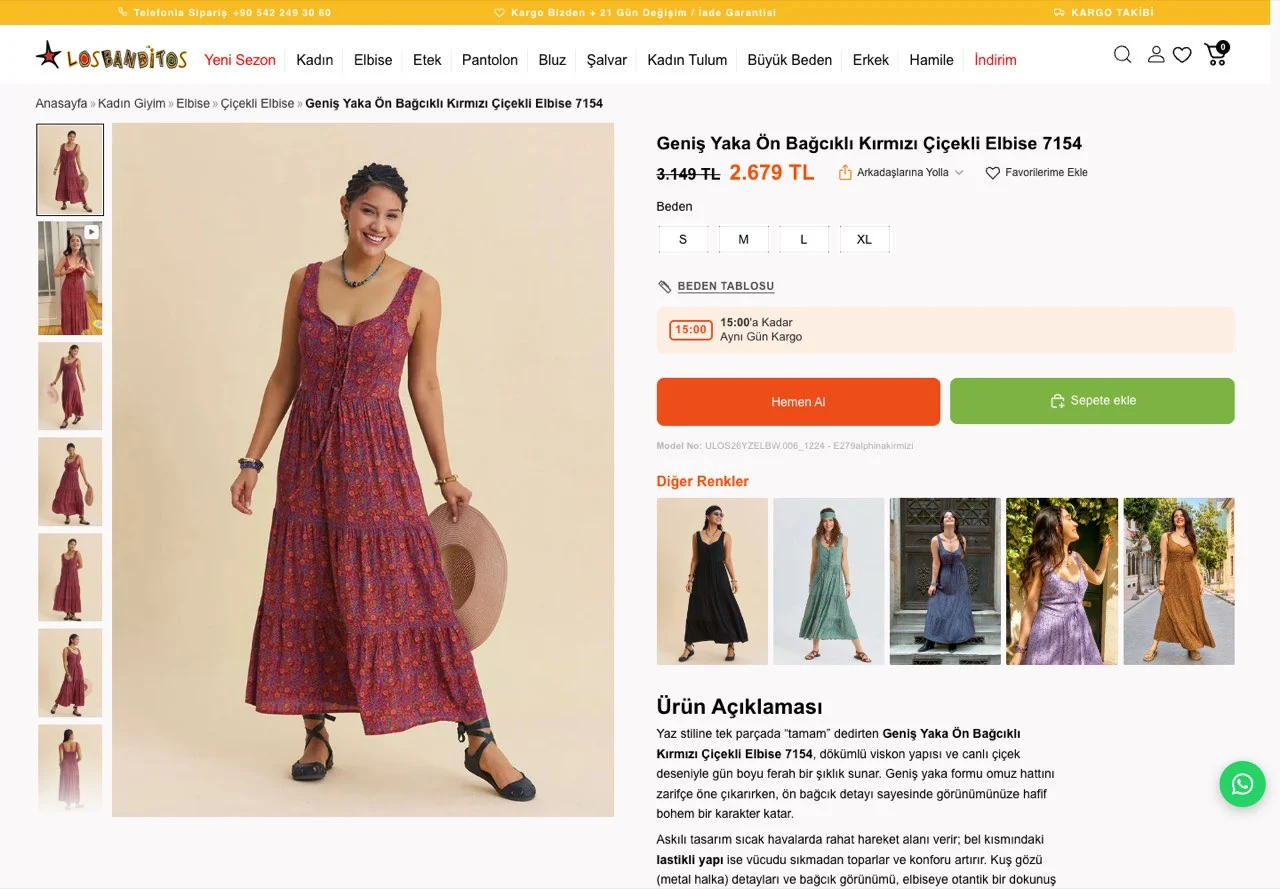
- Size selection is a precondition for purchase: proceeding without one raises a prompt beside the product, and the accelerated checkout button gives the same prompt.
- A vertical thumbnail gallery on the left, a product video that plays muted when in view, and full-screen zoom.
- A size chart modal, an “Other Colours” list (sold-out ones hidden), a model code line, and share and favourite actions.
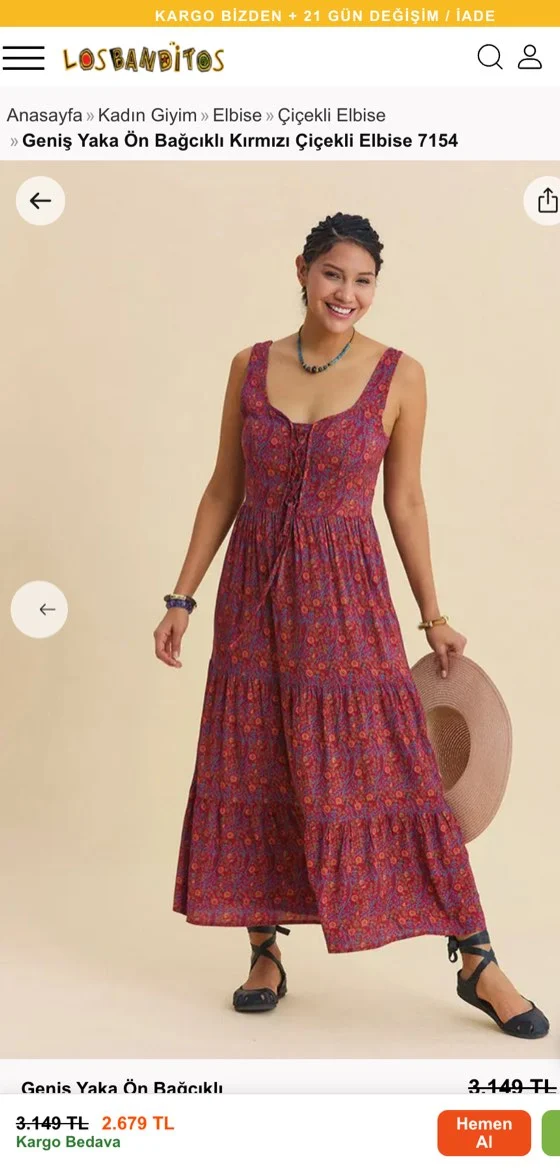
- A pinned price, Buy Now and Add to Cart bar on mobile, plus a WhatsApp order link.
Cart and checkout — the address chain
- Province and district selection in the cart; the selection is carried into checkout pre-filled into the right fields, so the billing address is correct from the start.
- The Buy Now flow skips the cart page but still carries the selected region into checkout.
- Add-to-cart confirmation: a modal on desktop, a bottom drawer on mobile, with a trust bar and returns and delivery information.
- The order summary and item list were moved into a card layout on desktop, simplifying the screen around the payment step.
Carrier integrations — Yurtiçi Kargo and Hepsijet
- On payment, the shipment record, barcoded label, tracking number, status sync and cancellation, both automatically and from a password-protected panel. It replaces a paid integrator subscription.
- Both carriers are managed from the same order screen; the label and tracking link are generated for whichever carrier is shipping.
- A deterministic shipment key prevents the same record being opened twice; webhook repeats and panel/automation races are handled safely.
- Shipping status is held on the order as a tag and a field, and a customer-facing tracking page was wired into the site.
B2B — group pricing with Shopify Functions
- Every wholesale customer is tied to a group; customers without a group key see retail prices. It runs inside the same store, with no separate B2B site.
- A group price list per product variant, with prices uploadable in bulk from CSV.
- A Shopify Function (discount function) applies the price in the cart and at checkout: the amount shown on the storefront and the amount paid are always the same.
- A signed-in wholesale customer sees their own net price and a “Wholesale Price” badge; an admin settings interface was built for the function. A wholesale application form feeds new enquiries into the same flow.
Operational tooling
- Product price and stock sync, stock code correction, size-stock generation.
- Bulk setup of metafield definitions and B2B price lists.
- Bulk writing of the breadcrumb hierarchy, plus category and content updates.
- Theme-side additions such as a favourites list, a shipment tracking page and a wholesale page.
Performance sprint
The services that provide measurement were not stripped out for the sake of speed; changes whose risk outweighed their gain were rejected, with the reasoning recorded. Because of Shopify's full-page cache, every fix was verified in production.
Result
The platform changed while the hard-won traffic and the operational habits stayed in place. Los Banditos now runs on Shopify with a custom theme in its own design language; shipping runs through its own app covering both carriers, wholesale selling happens inside the same store on group prices, and the flow from product page to checkout is built around how people actually shop in Turkey.