Paradigma Yayınları: from WordPress to Next.js, with a custom admin panel
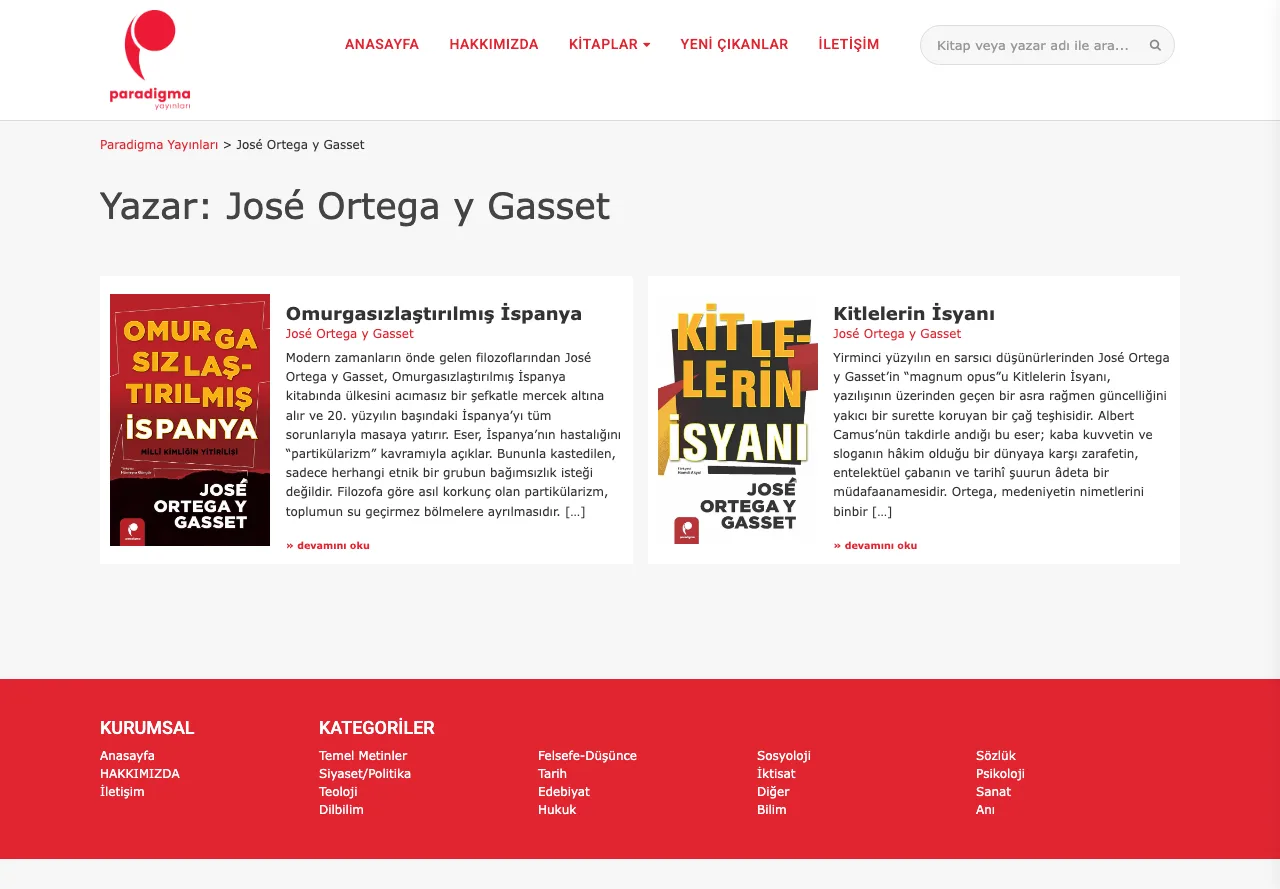
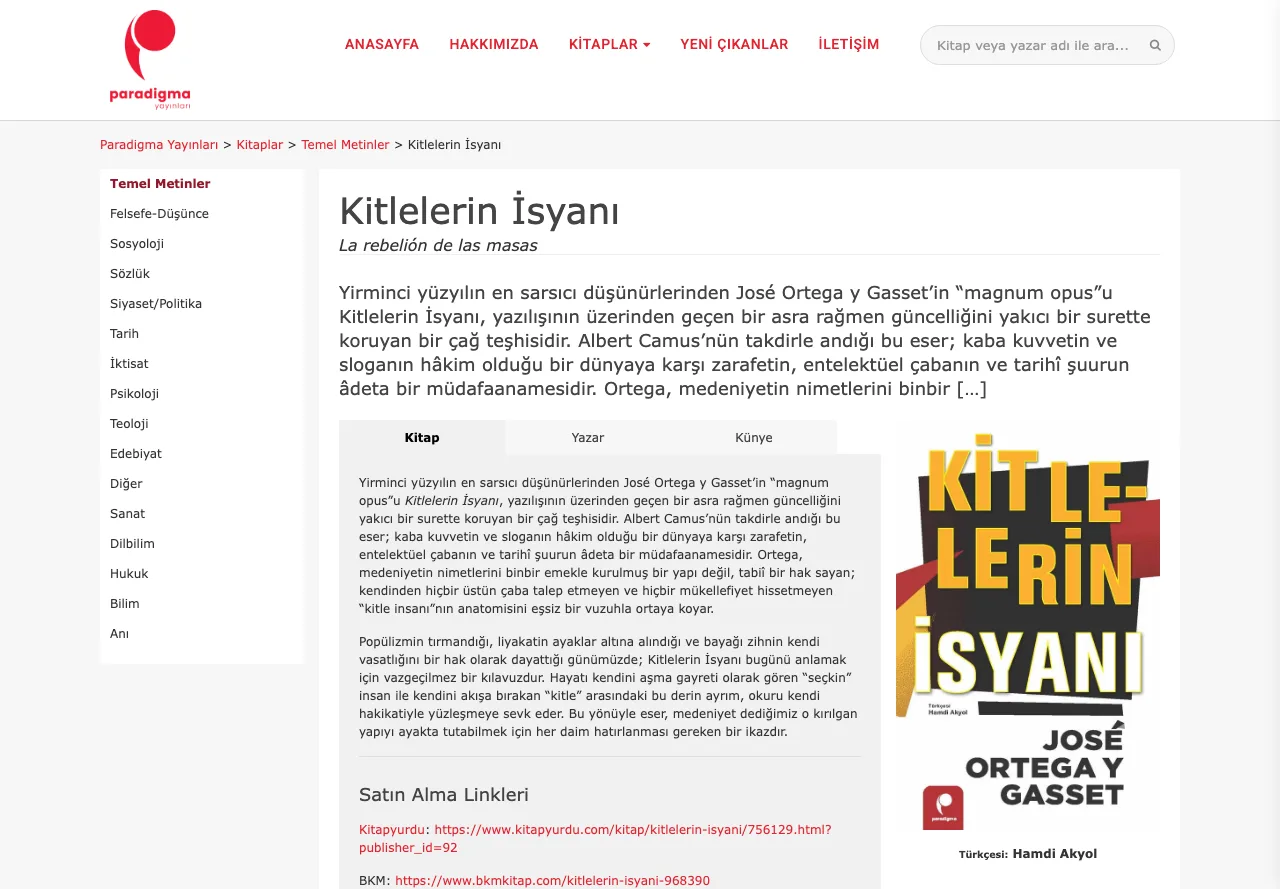
Paradigma Yayınları is a publishing house founded in the 1990s by Hüsamettin Arslan and Ahmet Cevizci, publishing original and translated works in philosophy and the social sciences. We moved a WordPress site held together by a stack of plugins to Next.js while preserving its appearance and URL structure exactly: 155 books, 107 authors, 52 categories and 1,816 media files were migrated in full, and a bespoke admin panel was built for managing books, authors, categories, sliders and pages.
What we inherited
- The site ran on WordPress; plugin updates, version compatibility and security holes created a constant maintenance burden.
- The catalogue had grown over the years: 155 books, 107 authors and 52 categories, with most books tied to several categories.
- Book pages had ranked in search results for years; any change to the URL structure would have put that accumulation at risk.
- Book covers were served at their original dimensions, leaving megabytes of unnecessary image weight on a single page.
- Content entry ran through the WordPress admin: the fields the publisher actually used (translator, original title, ISBN, imprint details, purchase links) were plugin fields squeezed in among the rest.
Our goal
- Change the infrastructure while preserving the design and every URL exactly, without losing the SEO accumulation.
- Build an admin panel that works in the publisher's own terms and needs no plugins.
- Bring book covers and page weight into the green on mobile measurements without losing quality.
- Publish book data in formats both search engines and AI assistants can read.
Content migration and URL preservation
- 155 books, 107 authors, 52 categories, 5 pages, slider images and 1,816 media files were extracted from the WordPress database and migrated to the new data model.
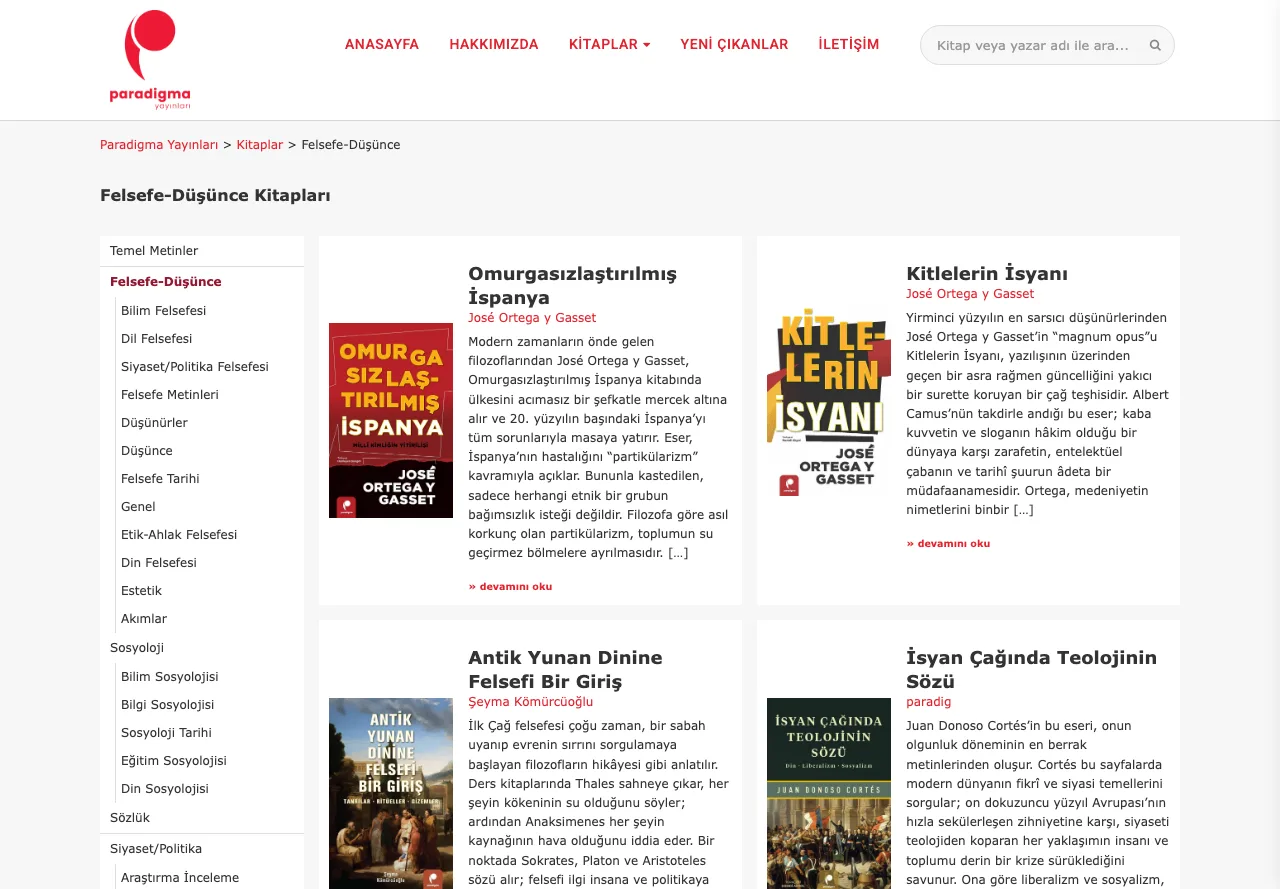
- Book, category and author URLs were kept exactly as they were, and the category hierarchy was rebuilt unchanged.
- Media files were left reachable at their old upload paths, so externally shared image links did not break.
- WordPress-specific leftover URLs (query-parameter links, old plugin paths) were redirected to the right pages.
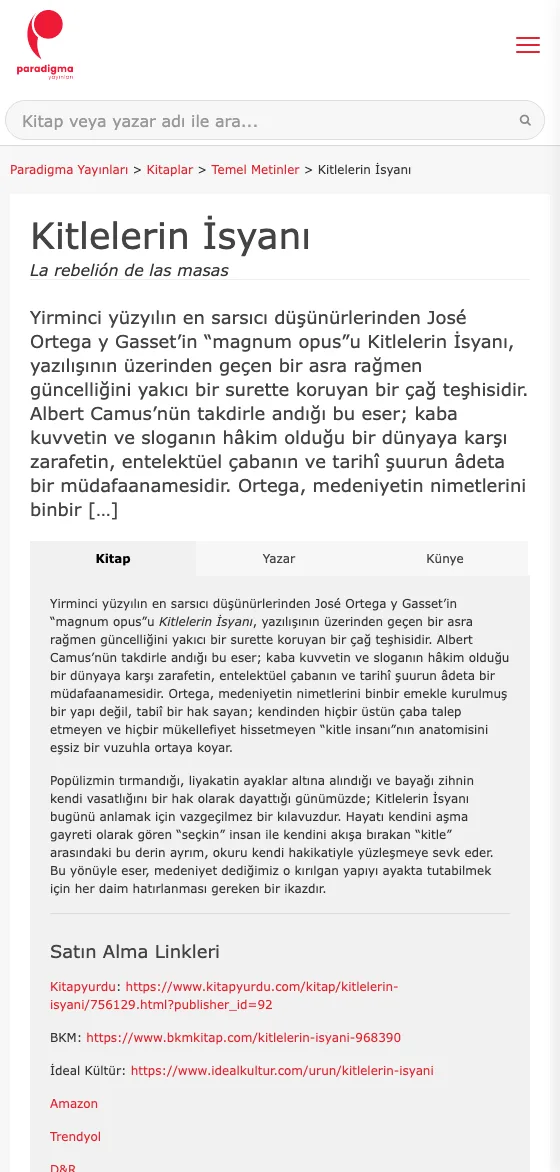
- Fields such as translator, original title, ISBN, imprint details and purchase links stopped being plugin fields and became first-class fields in the data model.
Custom admin panel
- Books: add, edit, delete; cover image and sample PDF upload; category and author assignment; live search, sorting and pagination in the list; a per-book “show on home page” option.
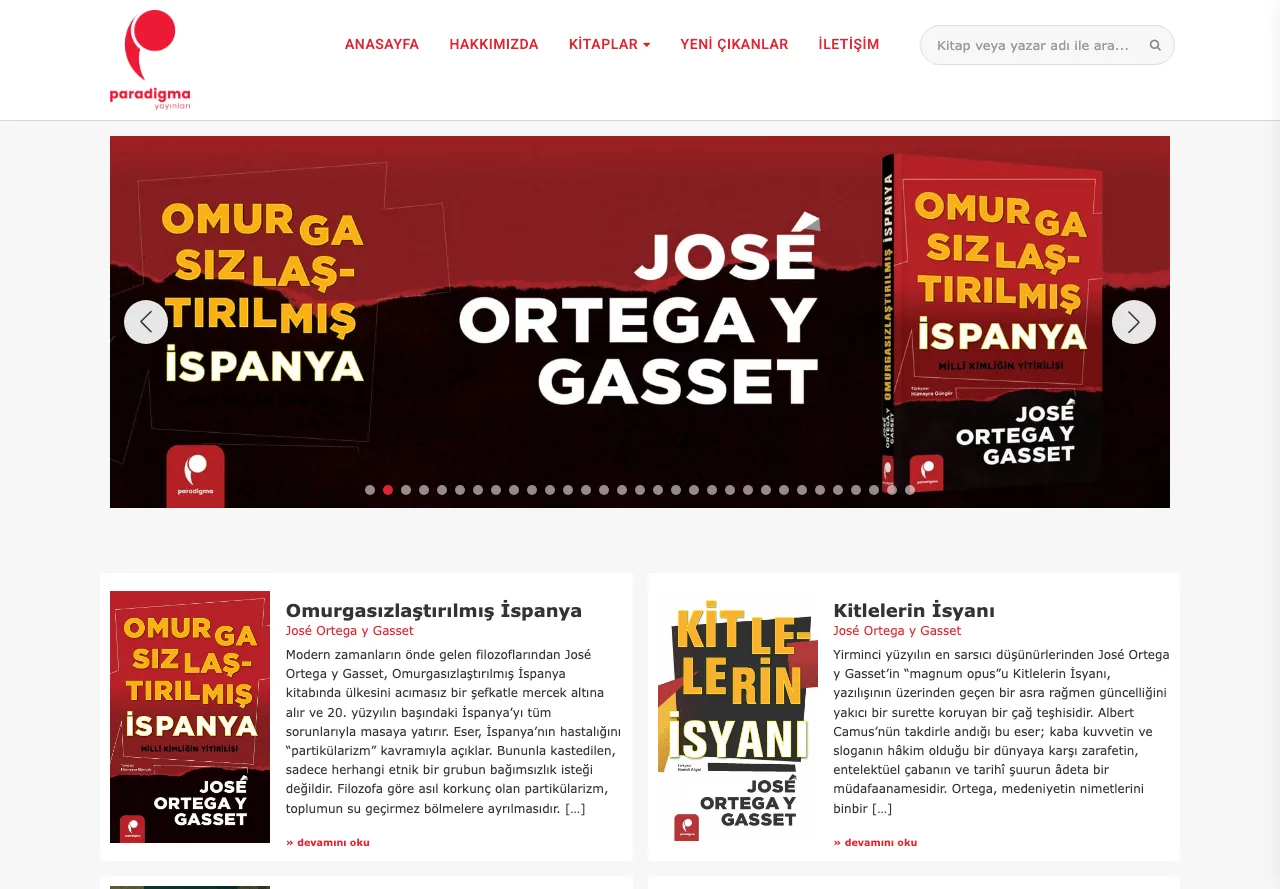
- Slider: adding home page hero images, linking them and ordering them by drag and drop; order saves automatically, and the old file of a replaced image is cleaned up.
- Authors and categories: biography editing, parent/child category hierarchy and category page title management.
- Messages: contact form submissions land in the panel, with read/unread filtering and search; suspicious messages are tagged rather than deleted.
- Site and SEO settings: logo, footer text, top menu categories, social accounts, home page title and description, share image, verification code.
Speed and performance
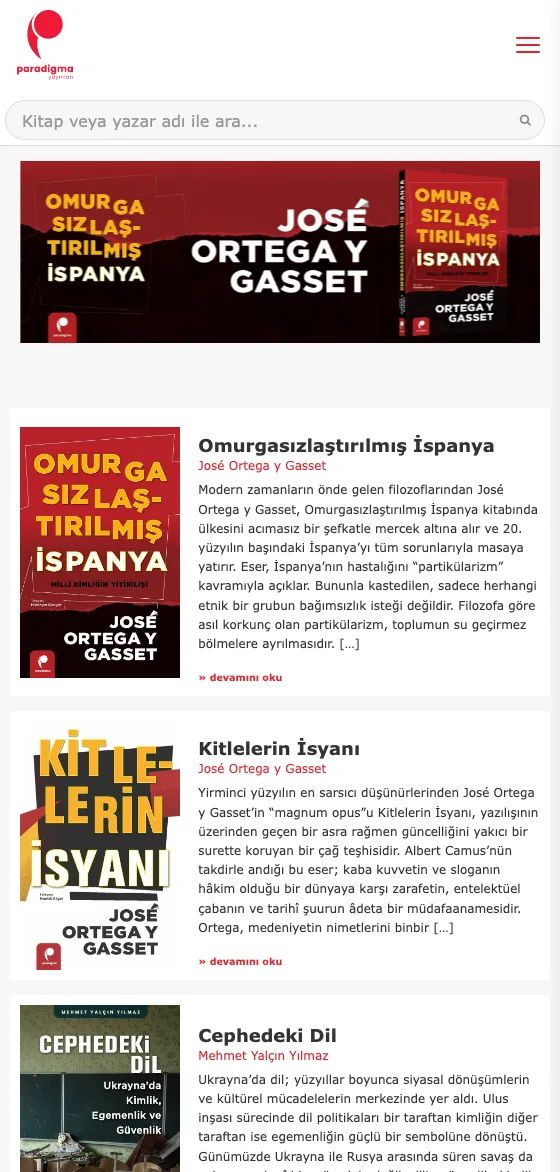
- Book covers are generated in modern image formats at the size they are actually displayed; cover files dropped far below their previous weight without losing quality.
- Fonts are served from our own server, removing the load delay of third-party font requests.
- The render-blocking plugin CSS/JS stack was removed entirely.
- The measured result: mobile performance of 100 on the category page, 100 on book pages and 95 on the home page; LCP 1.4–2.2 s, TBT 0 ms, CLS 0.
- On accessibility, text-to-background contrast was brought to WCAG AA, heading hierarchy was corrected, and screen reader labels were added to interactive elements.
Interface improvements
- Smart search: suggestions with book cover and author name appear as you type, with a link to all results at the bottom.
- A slide-out menu on mobile carrying the whole category tree, sub-categories included.
- Home page showcase: a touch-scrollable slider and featured books chosen from the panel.
- Descriptive titles on category pages, and book, author and imprint tabs on book pages.
SEO and AI visibility
- Book structured data on every book page: title, author, translator, ISBN and cover, plus Organization and breadcrumb markup.
- The sitemap and robots file are generated automatically, and page descriptions can be customised from the panel.
- For AI assistants, /llms.txt and /llms-full.txt are published; the latter gives the whole catalogue with its imprint details.
- Every book page has a Markdown version: adding .md to the URL returns a plain, machine-readable version of the book.
Result
The publisher moved to an infrastructure with no plugin or version maintenance, and content is managed from a single panel. Because the design and URLs did not change, the accumulated search positions were preserved, and mobile performance measurements rose into the 95–100 band. The catalogue is now open both to Google's rich results and to formats AI assistants can read.