Plus Education & Career: a bilingual study-abroad consultancy site
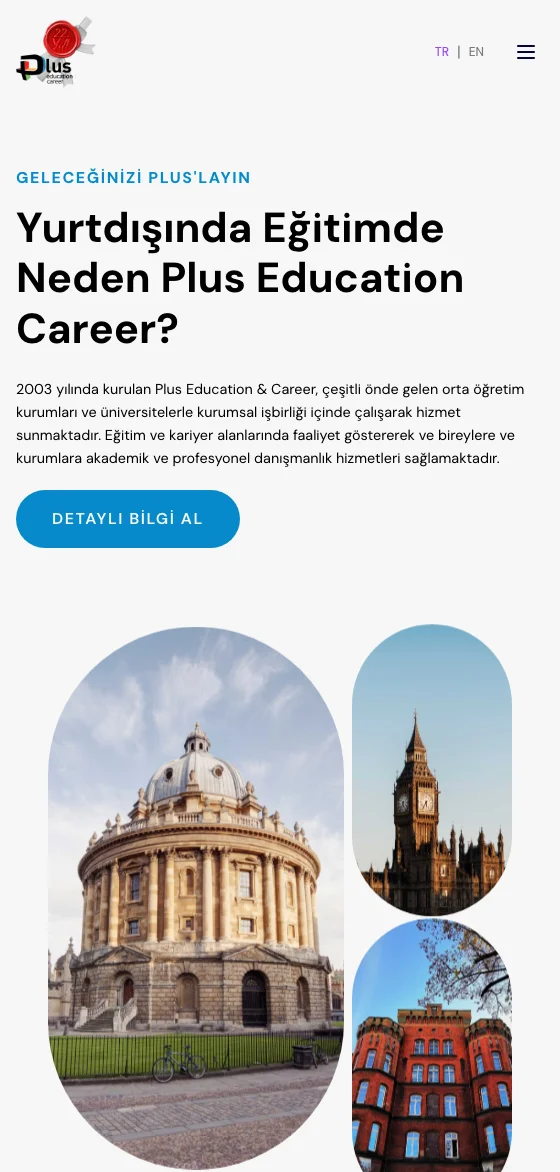
Plus Education & Career has advised on high school, university and career placement abroad since 2003. This was not a brochure site but an information architecture job: we built a structure that answers every question a parent and student ask before first contact: which country, which programme, which exam, which documents, what it costs. The site was built on Next.js, runs in Turkish and English, and ties 138 pages together under one navigation model.
What we inherited
- Studying abroad involves months of research before first contact: the family reads first and looks for a consultant afterwards. The site's job is to answer that research.
- Content branches along two axes at once: country (UK, USA, Canada, Germany, the Netherlands, France, Italy, Spain, Ireland, Switzerland…) and level (high school, university, popular programmes).
- The organisation serves individual students as well as colleges and institutions; both audiences have to move through the same site without getting lost.
- Part of the student base and the institutional partners communicate in English, so the English version had to be an equal half of the site rather than a translation bolted on later.
- The organisation's real proof is numbers and names: the universities students were admitted to, QS rankings, parent and student surveys, and the consultants' own backgrounds.
Our goal
- Build a structure navigable in one move from the top menu, without confusing the country and level axes.
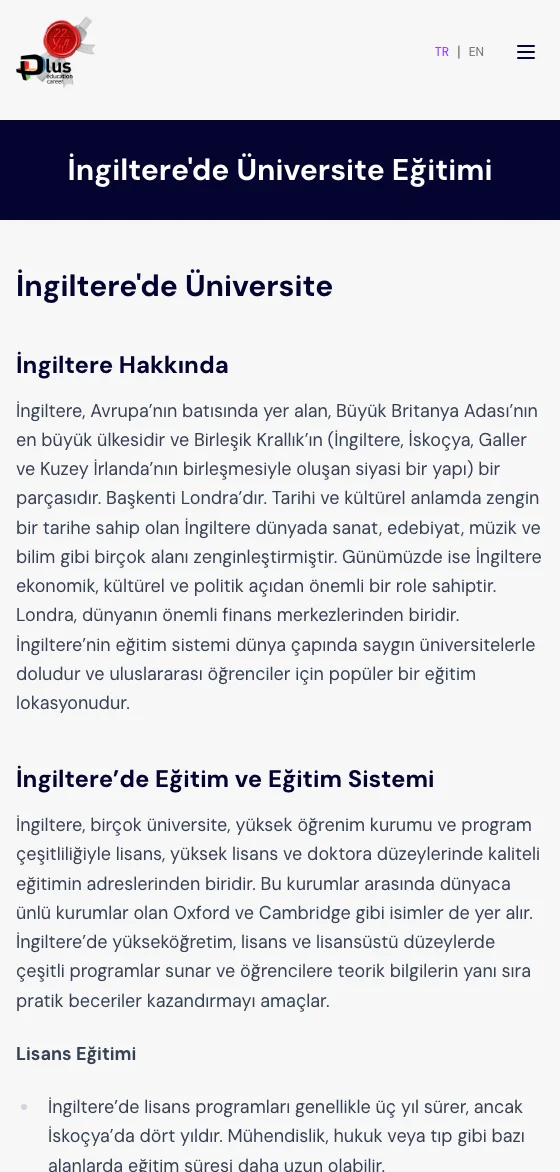
- Publish each country guide deep enough to actually inform a decision: education system, grading, exams, application process, living and accommodation.
- Run the Turkish and English versions with the same navigation and the same page set, switchable in one click.
- Put the organisation's proof (admissions, QS rankings, satisfaction rates, references) in plain view on the storefront.
- Make the contact points reachable from anywhere on the page: contact, newsletter signup and WhatsApp.
Information architecture and navigation
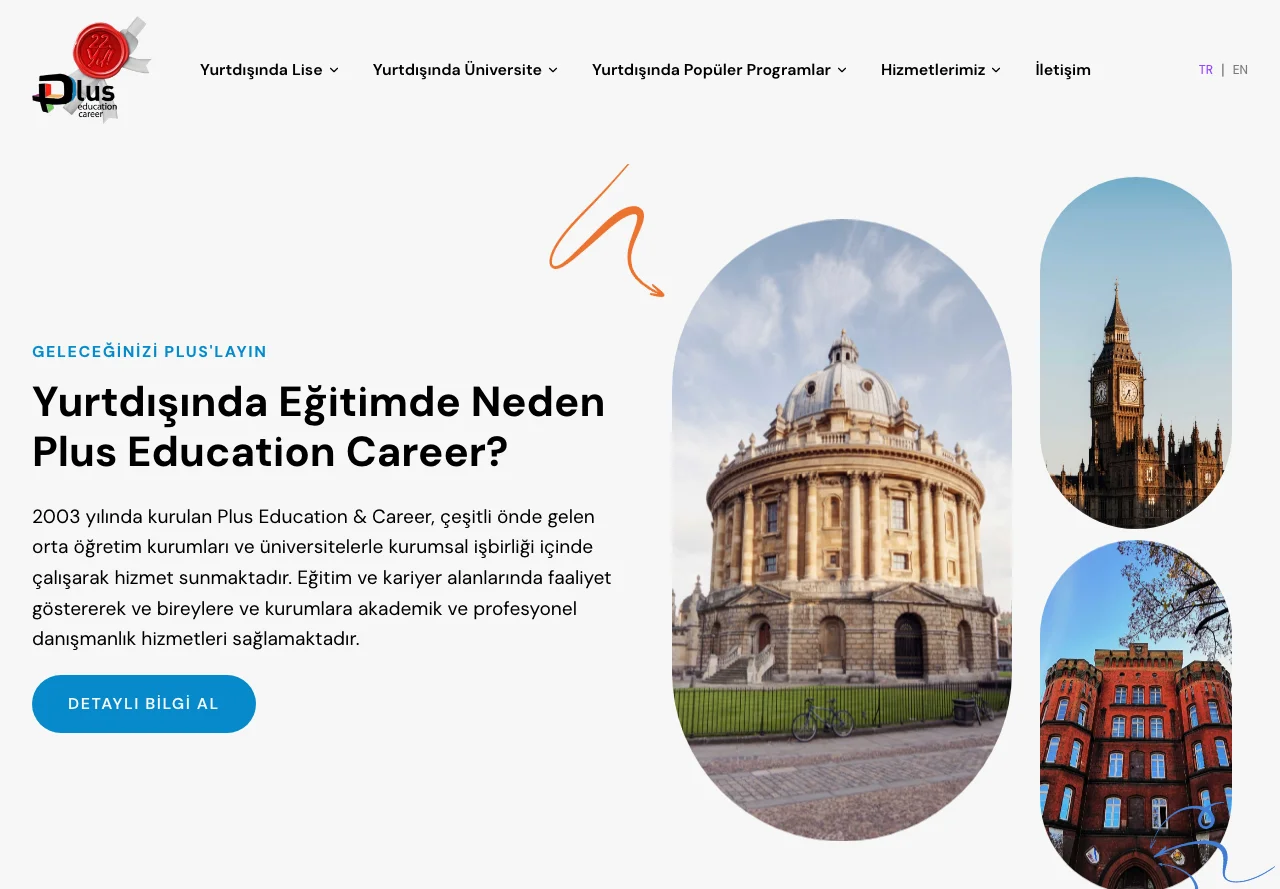
- The top menu was reduced to four main axes: High School Abroad, University Abroad, Popular Programmes, Our Services.
- 10 country guides on the high school side and 10 on the university side, each at its own URL with its own title and description.
- Popular programmes were built as a separate axis: design and fashion, tourism and culinary arts, film and media, business and MBA.
- Service pages (career consultancy, institutional consultancy, Libra Academy, scholarships, useful links) address the individual and institutional audiences separately.
- Corporate pages (who we are, what we do, what we have done, FAQ) were sequenced to describe the consultancy process step by step.
Country and programme guides
- Every country guide was written on the same skeleton: about the country, the education system, undergraduate–postgraduate–doctoral study, the grading system, the exams required, the application process, living and accommodation, leading universities.
- The shared skeleton lets a family compare two countries under the same headings, and keeps the pages coherent as content grows.
- Terms such as UCAS, IELTS/TOEFL, A-Level, IB and BMAT/LNAT are explained inside the guide, so the pages also answer those questions in search.
- Each page closes with a single, clear call to a consultant.
Turkish and English
- The two languages share the same page set; the English version runs under an /en prefix as the second face of the same structure rather than a separate site.
- Language preference is held in a cookie, so a returning visitor is met in the language they left in.
- The language switcher is fixed in the top menu: TR | EN, switching without leaving the page.
The proof showcase
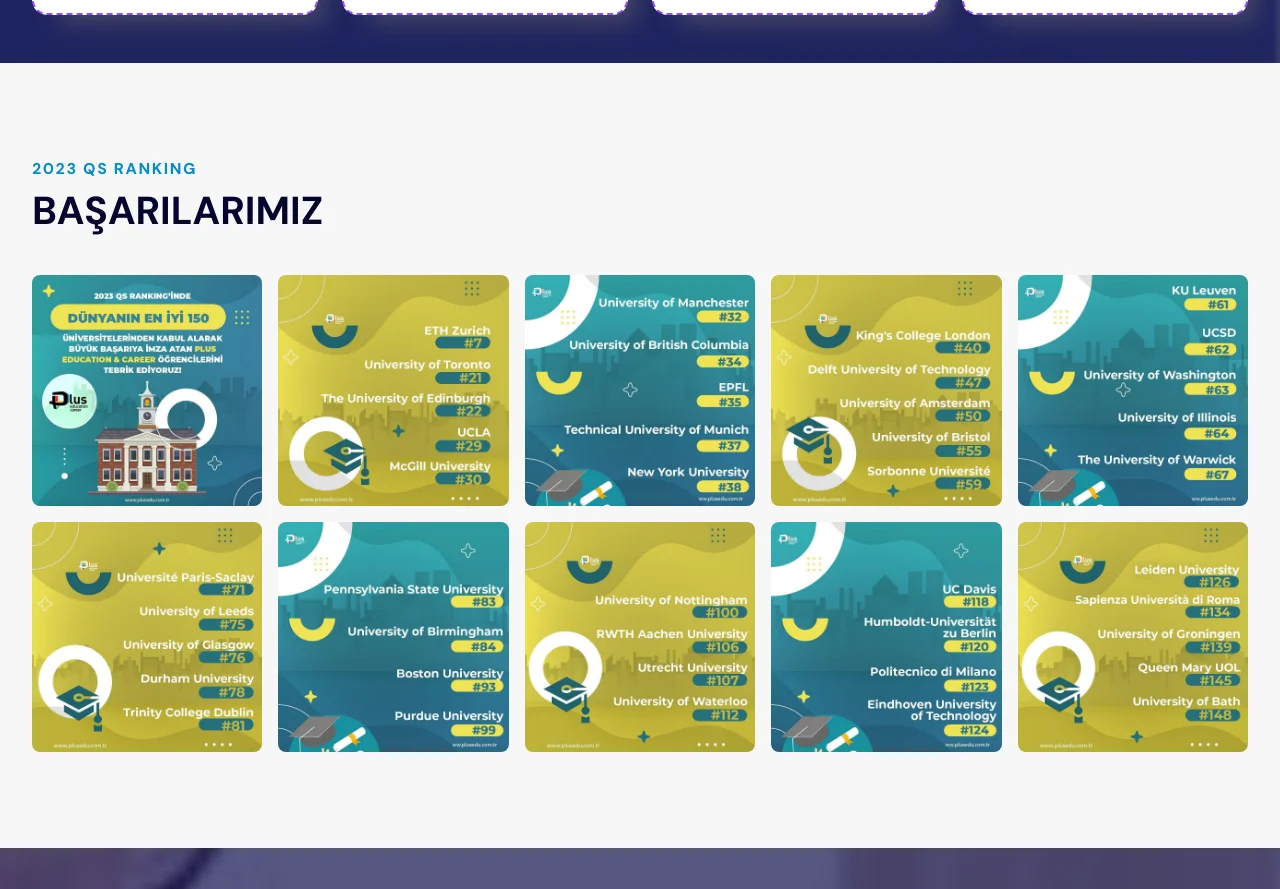
- A QS 2023 rankings section: the universities students were admitted to, shown as visual cards with their world ranking.
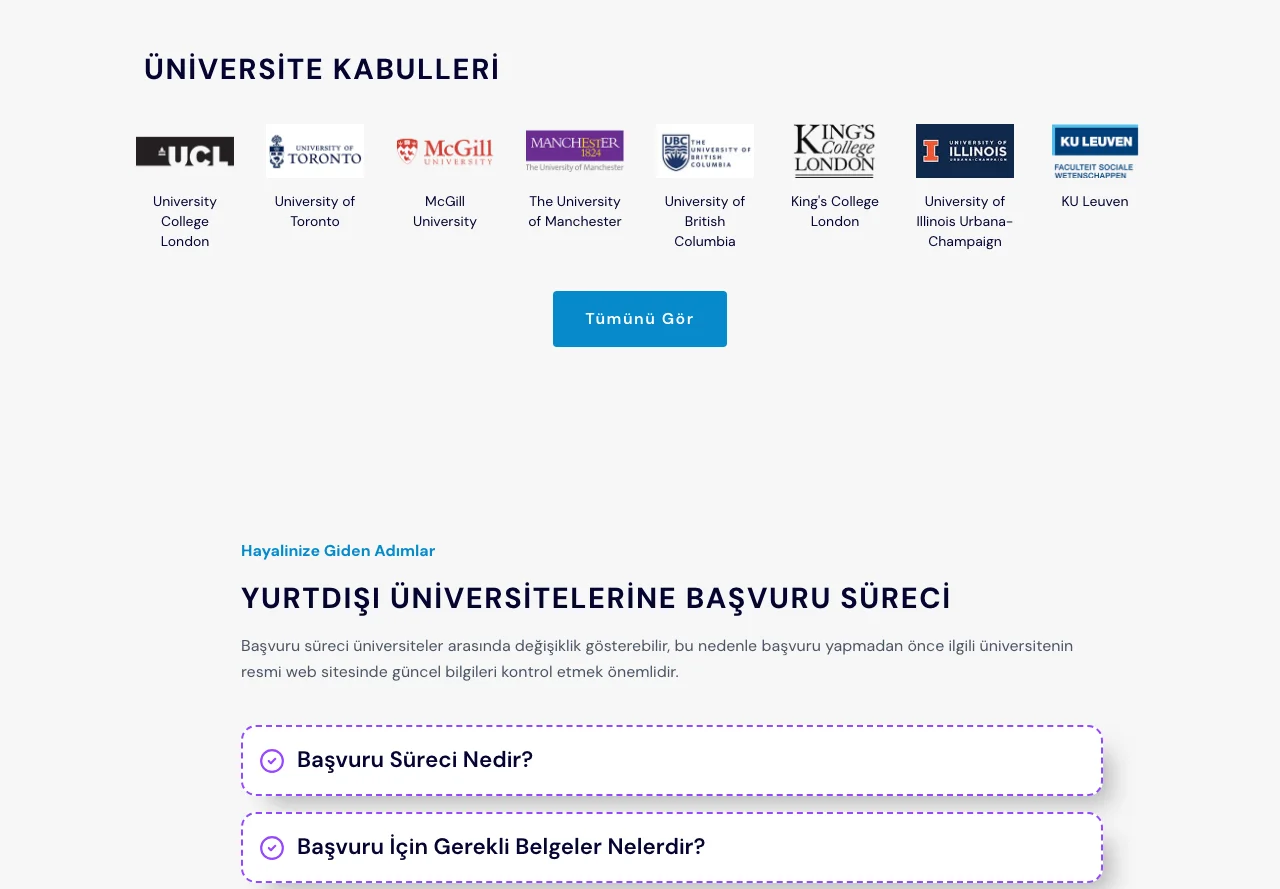
- An admissions page gathering 49 universities (Oxford, Cambridge, UCL, LSE, Bocconi, Politecnico di Milano, Toronto, McGill, MIT and others) into one list.
- Achievement counters that count up as the page scrolls: years of experience, university placement success, first-year completion and satisfaction rate.
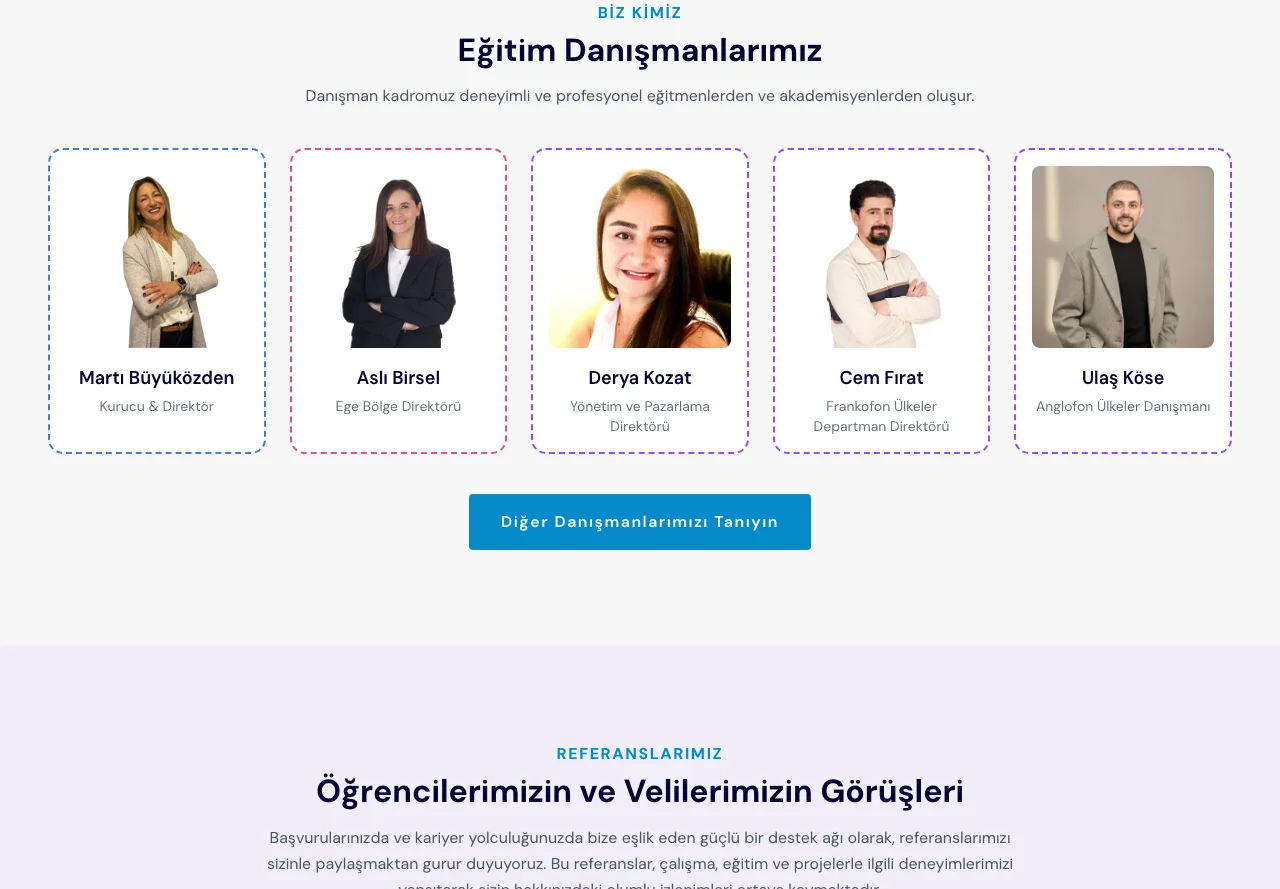
- The consultant team: each of 20 consultants with their own profile page, so it is clear who is who from the founder to the regional directors.
- References, parent and student satisfaction surveys and feedback from the consultancy process are published on separate pages, with names.
- A Global Campus section brings the webinar and clip archive onto the site from YouTube.
Technical setup
- The site was built with Next.js and runs on Cloudflare, with pages served from the edge worldwide.
- Hero images and fonts are preloaded, so text and imagery arrive together on first paint.
- The contact form, newsletter signup and satisfaction survey are tied to privacy notices and explicit consent.
- A WhatsApp button is fixed on every page, connecting to a consultant in one tap on mobile.
- The sitemap and robots file are generated automatically, and every page carries its own title and description.
Result
A family finds everything it was looking for before the first call: which system applies in which country, which exam is needed, how the application works, and where the organisation has placed students before. Because the Turkish and English versions share the same structure, adding a new country or programme grows the site in both languages at once.