Dış Ses Hearing Aids: a three-language product and appointment site
Dış Ses İşitme Cihazları is an authorised Signia sales and service centre in Sarıyer, Istanbul. The decision to buy a hearing aid is not completed online: people research, then pick up the phone. We built the site around that reality: a page for each of 12 Signia models, separate solution narratives for children, adults and older people, service and home-visit pages, and above all of it a contact layer that never leaves the screen. The site runs in Turkish, English and Arabic.
What we inherited
- A hearing aid is bought face to face because of its price and how it is fitted: the site's job is not to close the sale but to bring in the right appointment.
- The Signia product family branches by technology generation (IX, AX, Xperience, Nx) and by form factor (in-ear, RIC, slim-RIC, invisible); visitors do not know those distinctions.
- There are three audiences whose needs do not resemble each other: development and durability for children, design and connectivity for adults, ease of use for older people.
- The centre does not only sell; it repairs, cleans, adjusts and makes moulds for every brand. That is a reason to call in its own right.
- The patient profile in Istanbul is not monolingual: foreign nationals and Arabic-speaking clients make up a significant share.
Our goal
- Put the model catalogue into a structure that explains technology generation and form factor together.
- Send visitors to their own group (child / adult / older person) in one click.
- Bring service and home visits forward with their own pages, rather than leaving them in the catalogue's shadow.
- Keep an appointment one move away from every screen: call, message or leave a number.
- Run Turkish, English and Arabic on the same content, without changing page.
Product catalogue
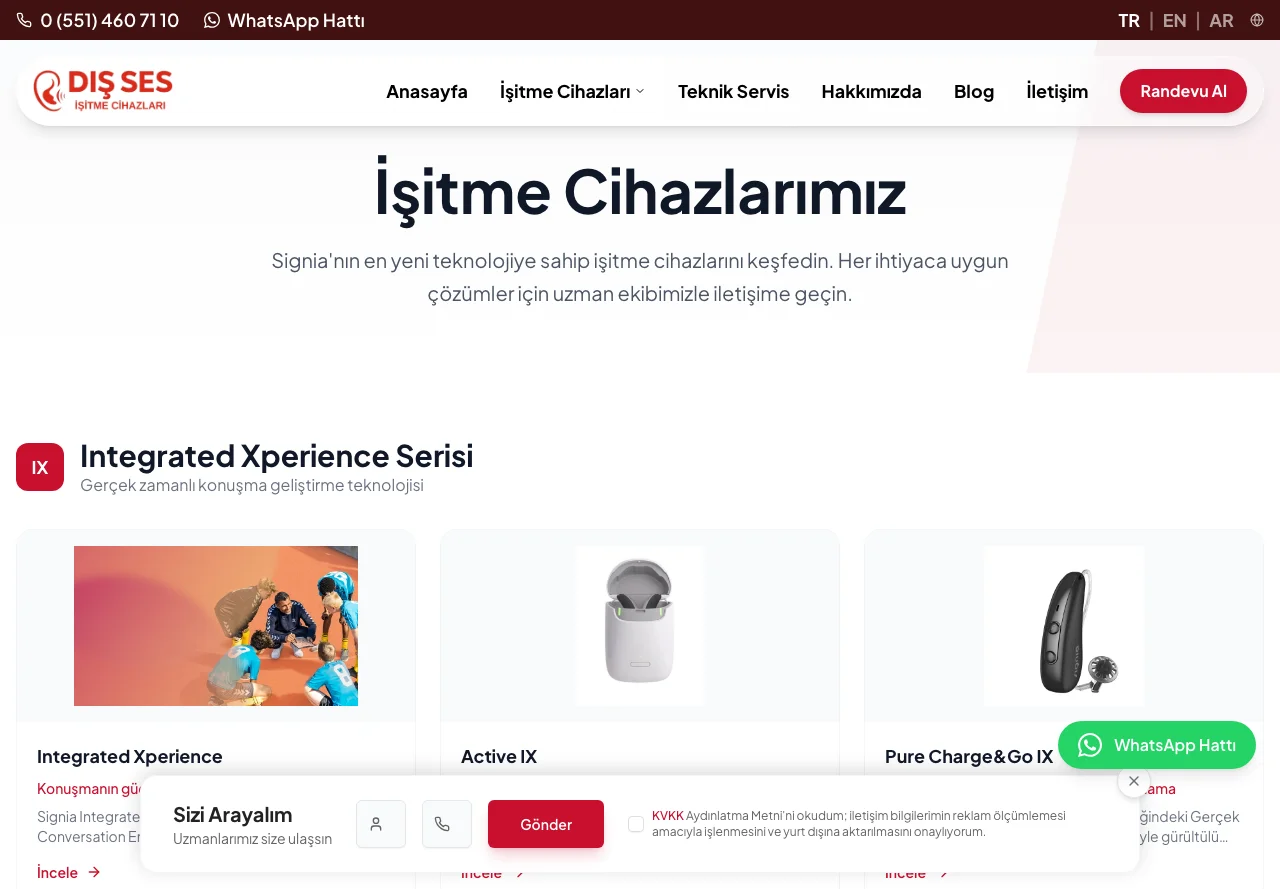
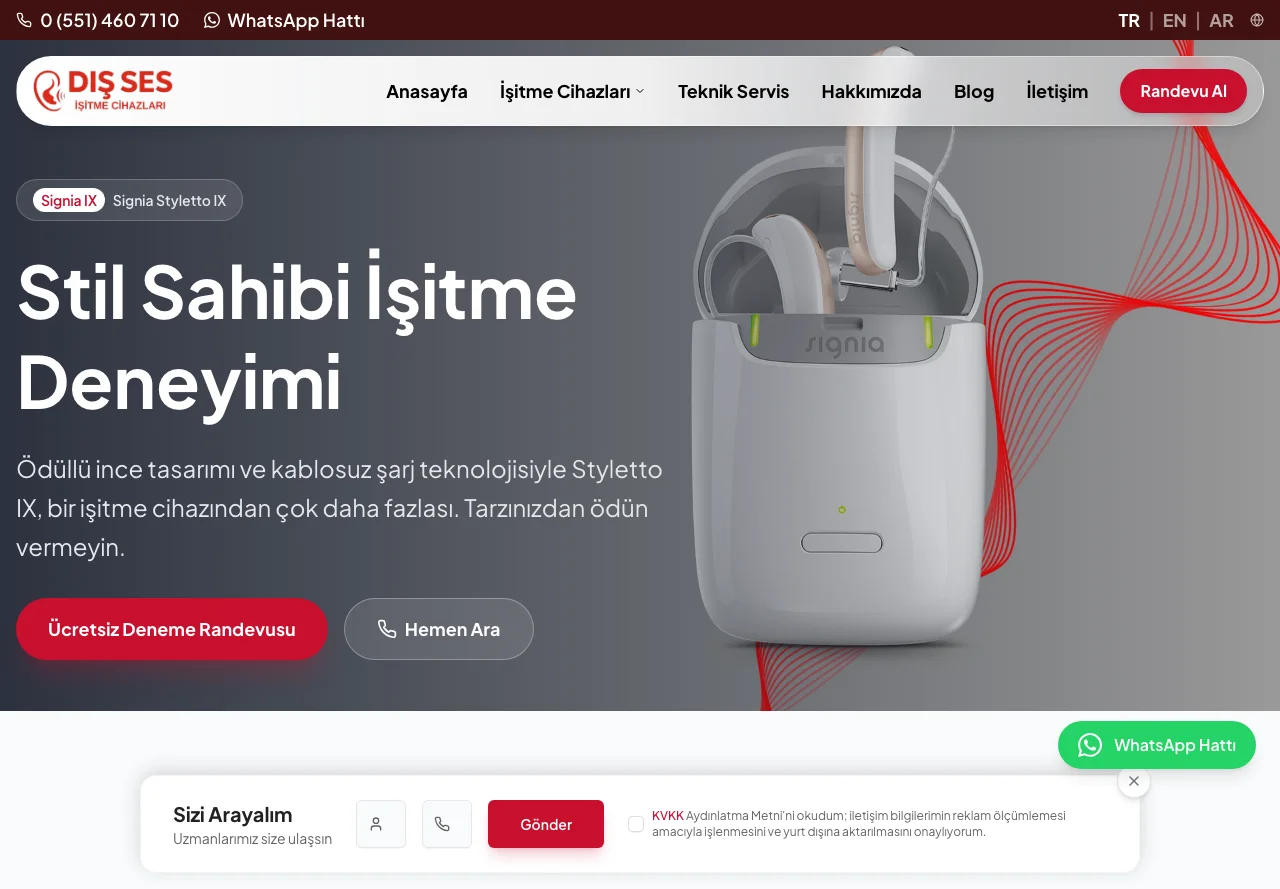
- 12 Signia models are published on their own pages: Insio IX, Styletto IX, Active IX, Silk Charge&Go IX, Pure Charge&Go IX, Silk X, Styletto AX, Pure Charge&Go AX, and the Integrated / Augmented Xperience, Signia Xperience and Signia Nx platforms.
- A one-line distinguishing note sits beside each model in the menu (“in-ear solutions”, “slim-RIC design”, “invisible comfort”, “RIC technology”), so visitors can choose without knowing the names.
- The catalogue page lists models grouped by technology series, making the difference between generations visible at list level.
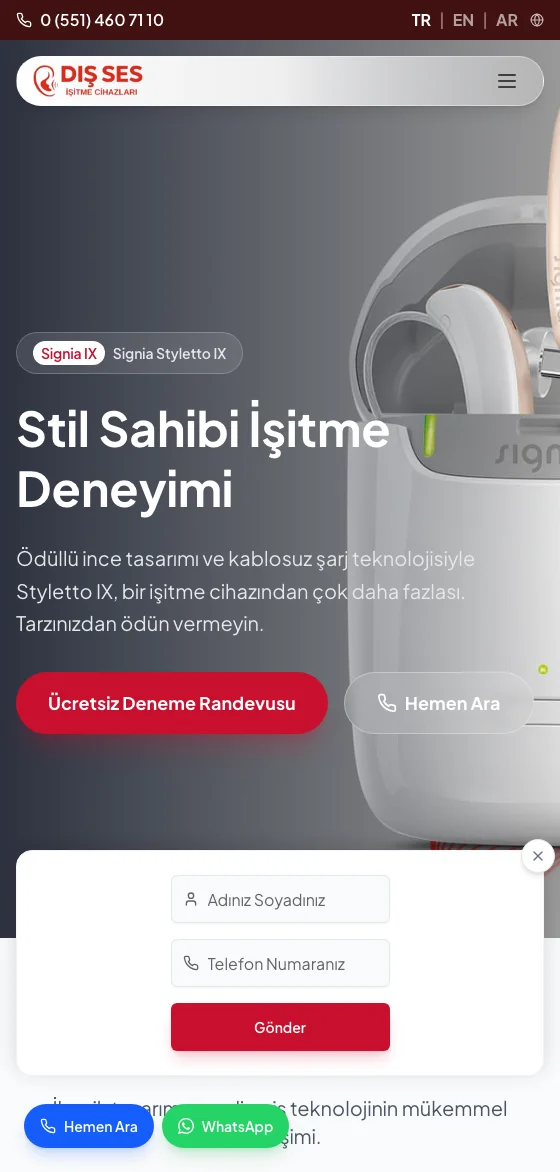
- The product page runs on a single template: hero, “why this model?” feature cards, FAQs and a technical specification list, then the appointment call to action.
- The FAQs answer the real purchase questions: which level of hearing loss it suits, how long it charges, how many hours it lasts, how check-ups work.
Solution pages by audience
- Three separate solution pages were built for children, adults and older people, with direct routes to all three from the home page.
- The children's page is written around early diagnosis, language development and school performance; the adult page around active life and design; the older person's page around ease of use and comfort.
- Each page carries its own visual language while using the same components, so the structure holds as content grows.
Service pages
- Technical service has its own page: repairs, ultrasonic cleaning and maintenance, adjustment and optimisation, ear mould production and fitting, with a commitment to original parts and warranty.
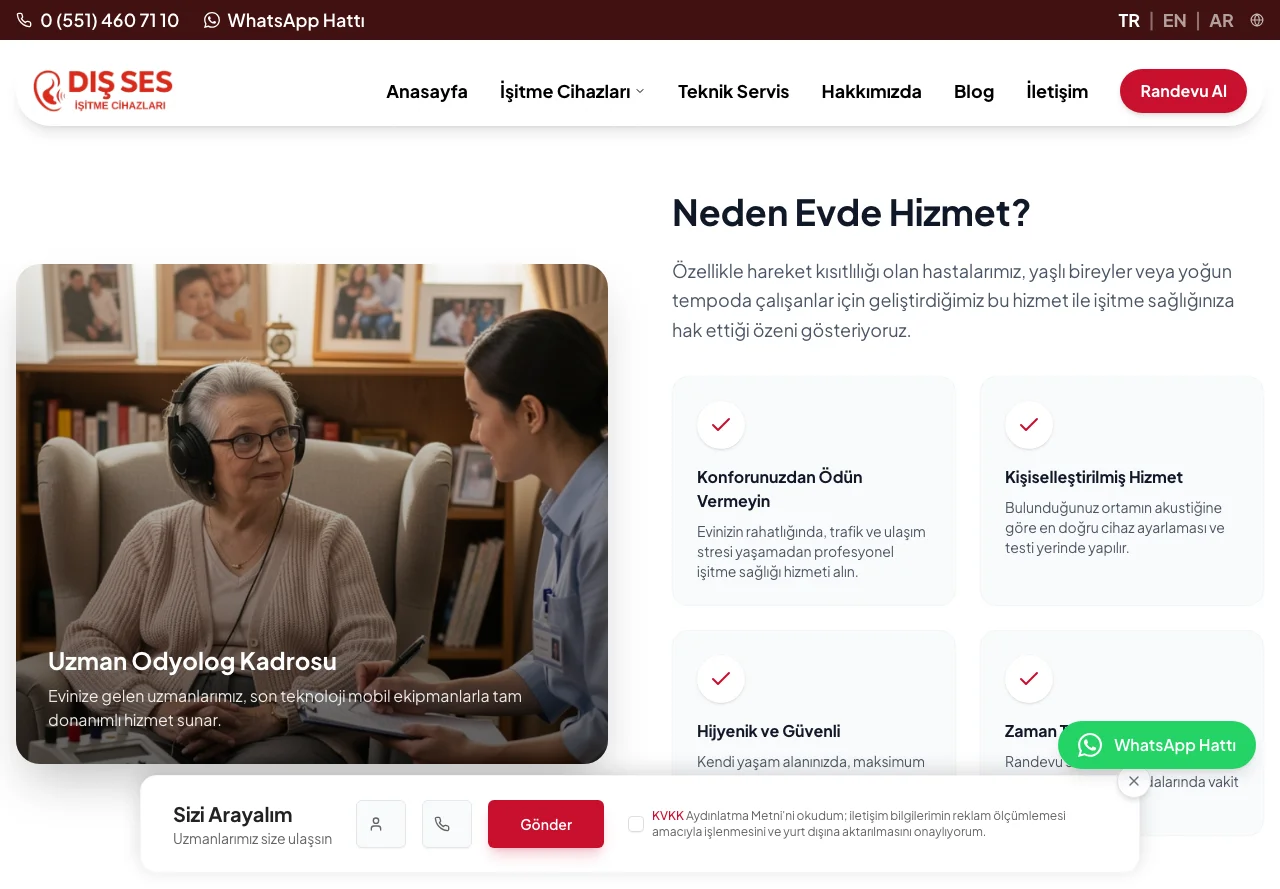
- The home service page targets patients who cannot come to the clinic: a free hearing test at home, flexible appointments, service across Istanbul.
- Free hearing tests and device trial-and-fitting steps are described on separate pages, so the client sees the process from the start.
- The FAQ page gathers the questions that recur before a first appointment into one place.
Appointment and contact layer
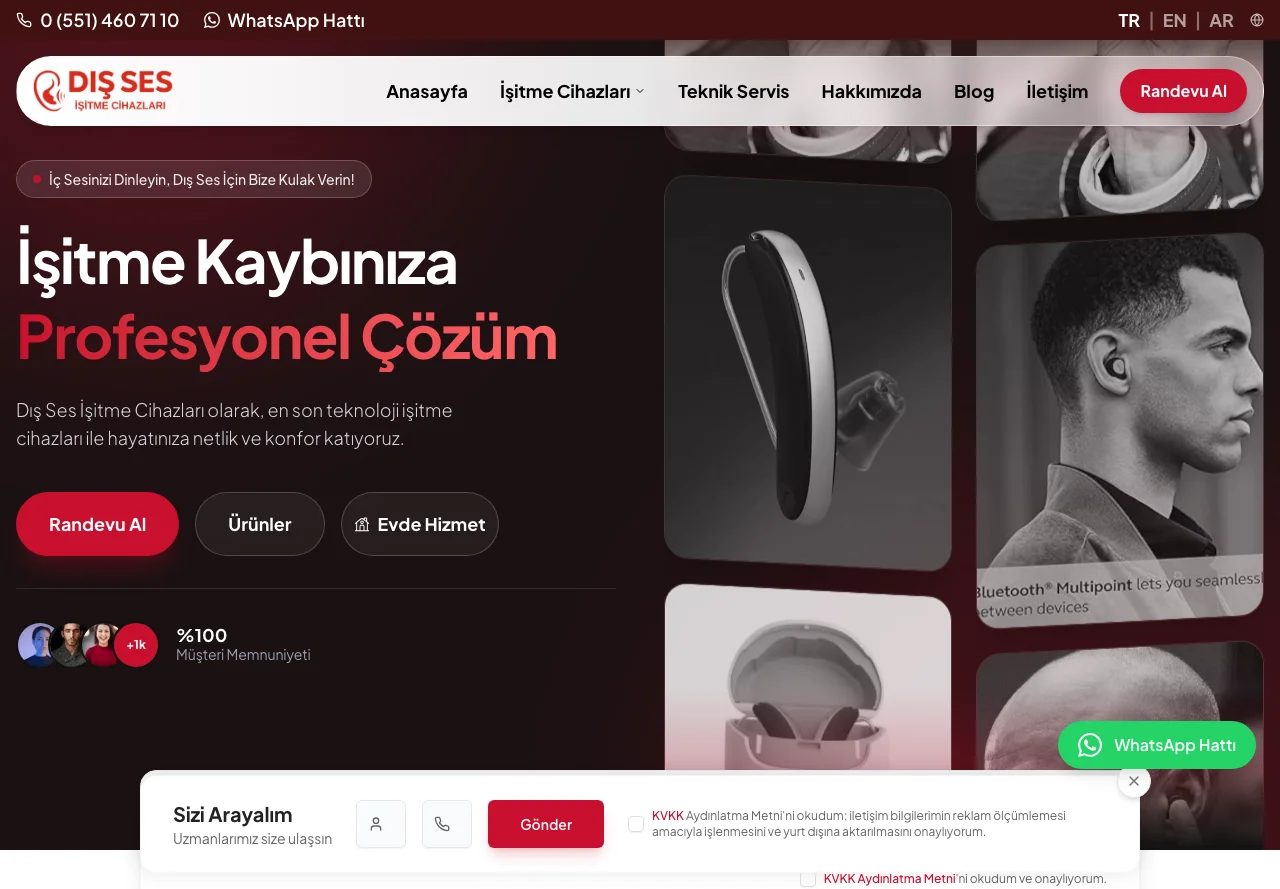
- The phone number and WhatsApp line are fixed in the top strip, with a red “Book an Appointment” button in the menu.
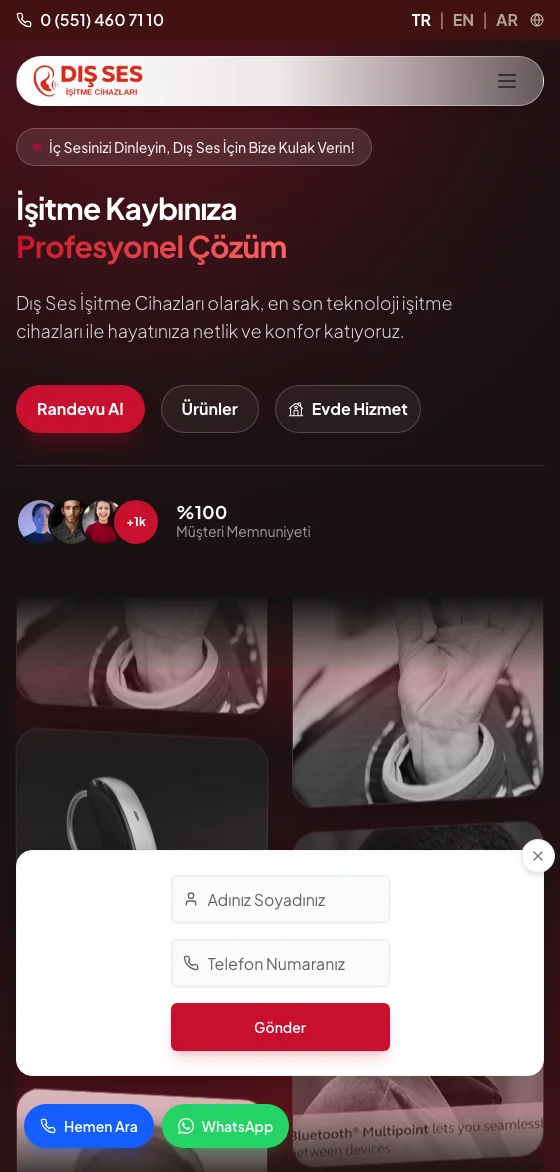
- A dismissible “Call Me Back” bar sits at the bottom of the page: you enter a name and number, and a specialist calls back.
- On mobile a “Call Now” and “WhatsApp” bar is pinned to the bottom of the screen, where the thumb already is.
- The contact page combines a long form, a map, the phone number and WhatsApp, and every form is tied to a privacy notice.
- A live chat widget is embedded in the page for visitors who prefer to type.
Three languages and the technical setup
- The Turkish, English and Arabic versions run on the same page; when the language changes, menu, content and form copy swap instantly and the visitor stays where they are.
- Language preference is stored in the browser, so a returning visitor is met in the same language.
- The site was built with Next.js and runs on Cloudflare via OpenNext, with pages pre-rendered and served from the edge.
- A blog section was built for hearing health content, and the sitemap and robots file are generated automatically.
- Analytics was set up through Google Tag Manager, so the return on advertising and search traffic can be tracked.
Result
Whichever door a visitor comes through (a model name, “a hearing aid for my child” or “my device is broken”), they reach their own page, and on that page an appointment stays one move away. Because the three languages run on the same content, adding a new model or service grows the site in all three at once.